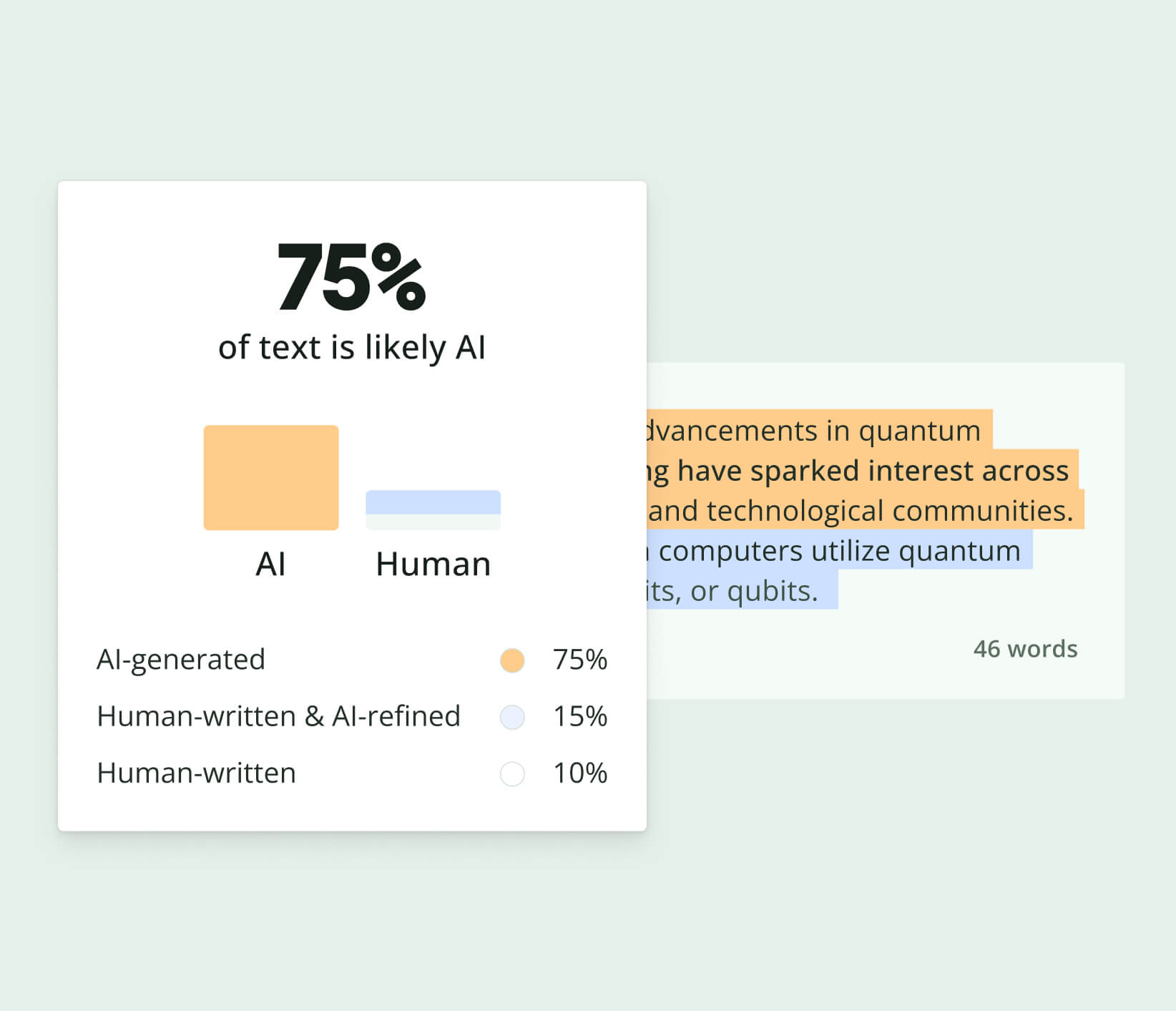
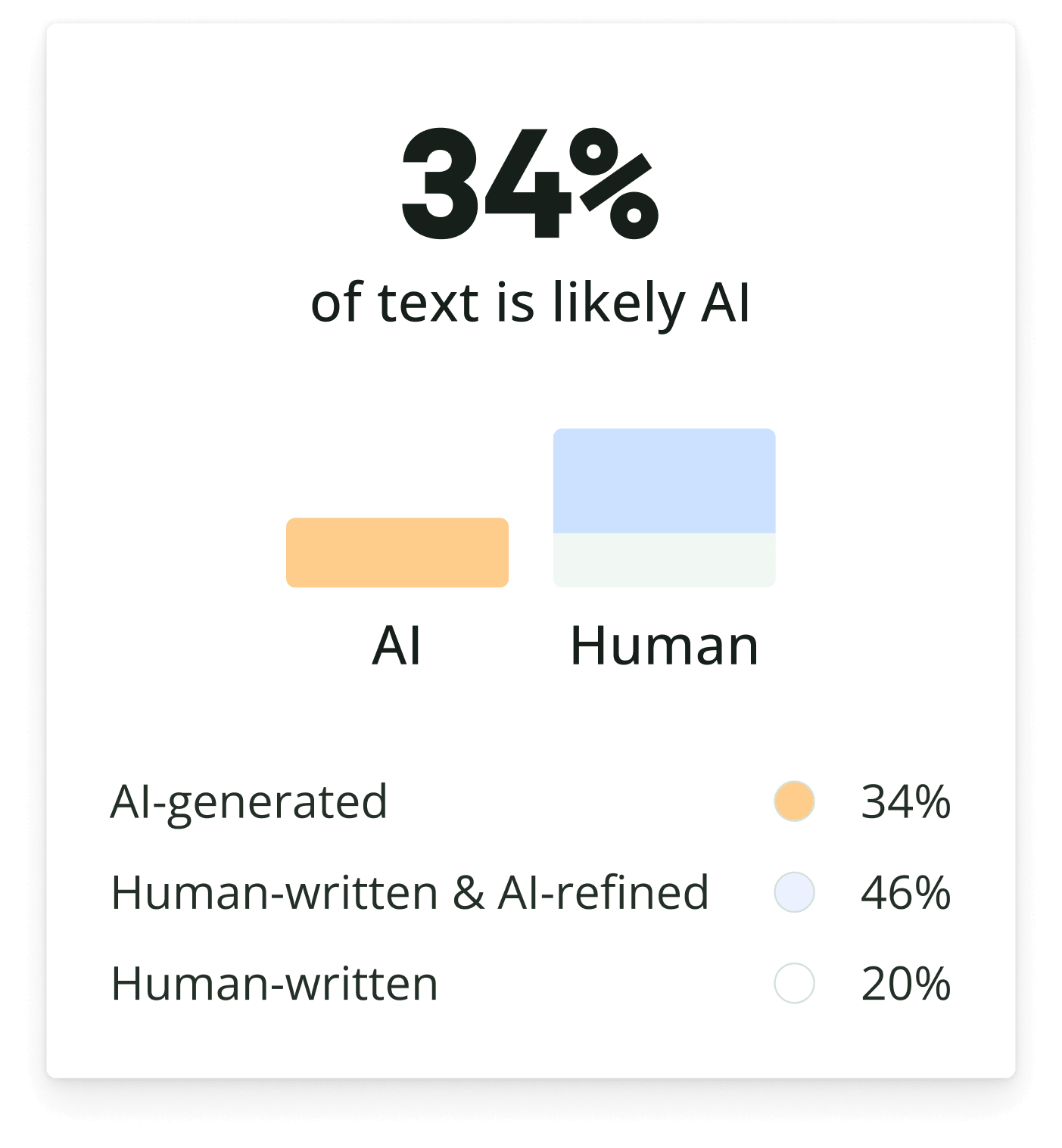
Yes, human writing can be flagged as AI-generated in some cases. AI detectors can produce false positives, especially when writing is highly structured, repetitive, or formal.
If you want to review flagged sections more closely, Quillbot’s AI Detector can help identify patterns that may appear overly predictable or AI-like.
Read this FAQ: Can human writing be flagged as AI-generated?
You can make AI-assisted writing sound more human by revising tone, adding personal insights, varying sentence structure, and removing repetitive phrasing.
Quillbot’s Humanizer and Paraphraser can help improve readability, variation, and flow while preserving the original meaning of your content
Read this FAQ: How can I make AI-assisted writing sound more human?
Plagiarism detection checks whether content was copied from existing sources, while AI detection estimates whether text was likely generated by artificial intelligence.
For a more complete originality review, Quillbot’s AI Detector and Plagiarism Checker can be used together to evaluate both AI-generated patterns and duplicated content.
Read this FAQ: What’s the difference between AI detection and plagiarism detection?
AI detectors can identify patterns commonly associated with ChatGPT and other AI writing tools, but they are not always accurate. Edited or hybrid content may produce unreliable results.
Quillbot’s AI Detector can help you quickly analyze AI-like writing patterns and review content before publishing or submitting it.
Read this FAQ: Can AI detectors accurately identify ChatGPT content?
Quillbot’s AI Detector is a strong option for educational institutions looking for an accessible and easy-to-use AI detection tool. It helps educators identify sections of writing that may sound AI-generated while supporting a more balanced and thoughtful review process.
One of Quillbot’s biggest advantages is that it goes beyond detection. Educational institutions can also use Quillbot’s writing tools for grammar checking, paraphrasing, summarizing, and citation support, making it useful for both educators and students.
Rather than relying only on detection scores, schools can use Quillbot to encourage stronger writing habits, improve clarity, and support responsible AI use in academic environments.
Read this FAQ: What is the best AI detector for educational institutions?
There’s no universally perfect AI detector, but Quillbot’s AI Detector is a popular option for copywriters who want to check content authenticity and reduce the risk of AI flags. It helps highlight sections that may sound machine-generated so you can refine them.
That said, detection tools shouldn’t be treated as final proof. The best approach is to pair them with thoughtful editing and your own judgment to ensure the content feels natural and original.
Read this FAQ: What is the best AI detector for copywriters?
AI detectors give hiring managers a neutral, fast way to check whether freelance submissions meet expectations before payment or publication.
Quillbot’s AI Detector helps streamline freelance reviews by quickly surfacing content that may need a closer check, giving hiring managers added confidence before approving work for payment or publication.
Read this FAQ: Are AI detectors useful for businesses hiring freelance writers?
When content output is high, AI detectors help teams prioritize which pieces need a human review. This targeted approach maintains quality standards without creating bottlenecks, giving editors and managers more time to focus on strategy and refinement rather than routine checks.
For teams managing high content volumes, Quillbot’s AI Detector helps quickly pinpoint pieces that need closer human review, keeping quality high without slowing down the workflow.
Read this FAQ: Can AI detectors improve content quality at scale?
AI detectors help businesses quickly identify whether published or submitted content was AI-generated, making it easier to maintain a consistent, authentic brand voice.
Tools like Quillbot’s AI Detector act as a helpful first-pass quality layer, allowing content teams to focus their review efforts on the pieces that need it most, rather than manually auditing everything.
Read this FAQ: How can AI detectors help businesses protect their brand?
A flag is a prompt for a conversation, not a verdict. Instructors can use it as a starting point to discuss the writing process, review earlier drafts, or compare it with in-class writing samples. This allows for meaningful learning conversations instead of immediate disciplinary action.
Instead of delivering final judgements, Quillbot’s AI Detector highlights areas worth a closer look, giving instructors a useful entry point for discussing a student’s writing process and encouraging more thoughtful, constructive conversations.
Read this FAQ: What should an instructor do if an AI detector flags student work?