If you’ve wondered whether it’s “football” or “soccer,” you’re not alone. Both terms usually refer to the same sport—the one played at events like the FIFA World Cup. Which one people use depends on where they live. Most of the world calls it “football,” while the United States, Canada, Australia, and a few other countries primarily use “soccer” to avoid confusion with their own local versions of football.
So why does the same sport have two different names? The answer lies in the history of the game and the way different countries adopted the terminology.
TipLooking for football visuals? You can use Quillbot’s free AI image generator to create your own or download these ready-to-use football background images.
Key takeaways
“Football” and “soccer” are the same sport, the one played at the FIFA World Cup and similar events. The name just depends on where you are.
“Soccer” comes from 19th-century England as a shorthand for “association football,” but “football” went on to dominate globally.
Most of the world says “football.” The US, Canada, Australia, and a handful of other countries say “soccer” to set it apart from their own versions of the game.
The design thinking process is a way of solving problems by starting with the people you’re solving them for, rather than jumping straight to solutions. It helps you understand real needs, explore different directions, and improve ideas through iteration.
Although it’s often used in team settings, the process also works well when you’re developing ideas on your own.
In this article, you’ll learn how the design thinking process works and how to apply its five stages in practice—even as a solo creator, educator, or communicator.
Design thinking is all about testing and refining ideas, and that applies to how you express them, too. Quillbot’s Paraphraser can help you explore alternative versions of a sentence as you iterate.
Key takeaways
The design thinking process is a user-focused, iterative approach to solving problems by understanding needs, exploring ideas, and refining solutions through feedback.
It follows five stages: empathize, define, ideate, prototype, and test, but the process is non-linear in practice.
It prioritizes real user needs and early testing over assumptions or fixed, final solutions.
It is commonly used in team settings, but it can also be applied effectively by individuals across writing, teaching, and other creative or problem-solving work.
Visual identity is the collection of visual elements, like logos, colors, and typography, that shape how a brand looks. Together, these signals create a “visual shorthand” that helps people recognize your business instantly across websites, social media, and packaging.
Ready to start building? Use Quillbot’s AI Mockup Generator to explore different visual directions and see your brand come to life as you go.
Key Takeways
What is it: Visual identity is the “visual shorthand”—logos, colors, and fonts—that tells your brand’s story before a word is read. It builds immediate recognition, establishes professional trust, and helps you stand out from competitors.
Key Elements: A cohesive system requires a simple logo, a strategic color palette, consistent typography, and a distinct imagery style.
Visual vs. Brand Identity: Visual identity is how you look; brand identity is who you are (your values, voice, and mission).
How to build it: Start with a clear brand direction, create a moodboard, and define your elements before applying them consistently across every customer touchpoint.
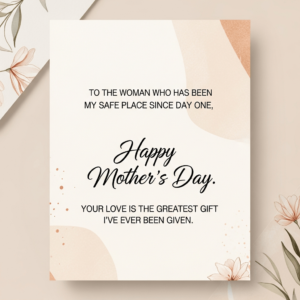
Moms do so much for us, and yet somehow, we never thank them enough. That’s why Mother’s Day wishes and messages are the perfect way to let moms and maternal figures know how much they mean to us.
If you’re struggling to put your feelings into words, we’ve got ideas for all kinds of Mother’s Day messages: from heartfelt to funny, plus tips on how to personalize them so you can capture the essence of your unique relationship.
Knowing how to make an infographic sounds straightforward—pick a template, drop in some data, done. But the ones that actually get shared and remembered do something most people skip: they make a single, clear point and build everything around it.
This step-by-step guide shows you exactly how to make an infographic, from defining your message to refining the final design. You’ll learn how to simplify your content and structure it so your infographic is clear and easy to follow.
TipDon’t let typos distract from your message. Use Quillbot’s Grammar Checker so you can focus on designing your infographic.
“Happy Monday” sounds like a contradiction in terms, and yet some people deliberately use the phrase in text messages, gifs, and memes. Is it because they are hopelessly optimistic or already retired? We can’t tell.
What we can say is that, like most wishes and expressions, it’s less about the day and more about the small, rebellious act of choosing to greet it with a smile—or a smirk. That’s up to you.
Monday energy, in cartoon form. Generated with Quillbot’s AI Image Generator
Knowing how to read body language sounds simple, but it’s easy to get it wrong. The same gesture that signals confidence in one moment can signal discomfort in the next—and the difference usually comes down to context.
Think about the colleague who leans back and goes quiet mid-meeting, the interviewer who nods but reaches for their pen, or a room that suddenly goes still during a presentation. These moments carry meaning, but not always the meaning we assume.
This article breaks down the main types of nonverbal signals and shows you how to read them more accurately in professional settings—so you stop reacting to single cues and start seeing the bigger picture.
Your boss says “no worries” after you miss a deadline. But they won’t make eye contact with you, their arms are crossed, and when you ask a question in the team meeting, they answer without looking up from their laptop. Worries? There are definitely worries.
This is nonverbal communication, and you’re already fluent in it—even if you’ve never studied it. Crossed arms, an awkward pause, a smile that doesn’t quite reach someone’s eyes. These signals often say more than the words around them.
In this article, we’ll cover what nonverbal communication is, the main types, and how to use this knowledge in real life. If you have more questions along the way, Quillbot’s AI Chat is there to help.
“Happy spring” is a simple phrase, but it tends to show up everywhere this time of year. As winter fades and the days grow longer, people use it in cards, social media captions, classroom boards, and even work emails to mark a fresh start.
In this guide, you’ll find happy spring quotes, ready-to-use greetings, spring break captions, equinox wishes, and creative ideas for images and coloring pages—plus updated details for the first day of spring in 2026.
If you’re looking for happy spring messages on the go, explore ideas instantly with Quillbot’s AI Chat.
A quick message to a colleague comes off as hostile. A conversation with a friend suddenly turns awkward. An email that sounds natural in your head, but comes across as blunt to someone else. We’ve all been there.
The difference between a message that lands well and one that misses the mark often comes down to interpersonal communication: the exchange of information, feelings, and meaning between people through both what we say and how we say it.
In the sections below, we’ll take a closer look at what interpersonal communication really means, how it shows up in daily interactions, and what you can do to improve your communication skills.
TipIf you want a quick way to make your writing sound more natural, you can try Quillbot’s Humanize AI to instantly refine tone and make your messages land better.
Download our FREE All-in-One Content Workflow Guide to learn how to create, refine, and repurpose content more efficiently with Quillbot. Packed with actionable tips and real-world workflows.